
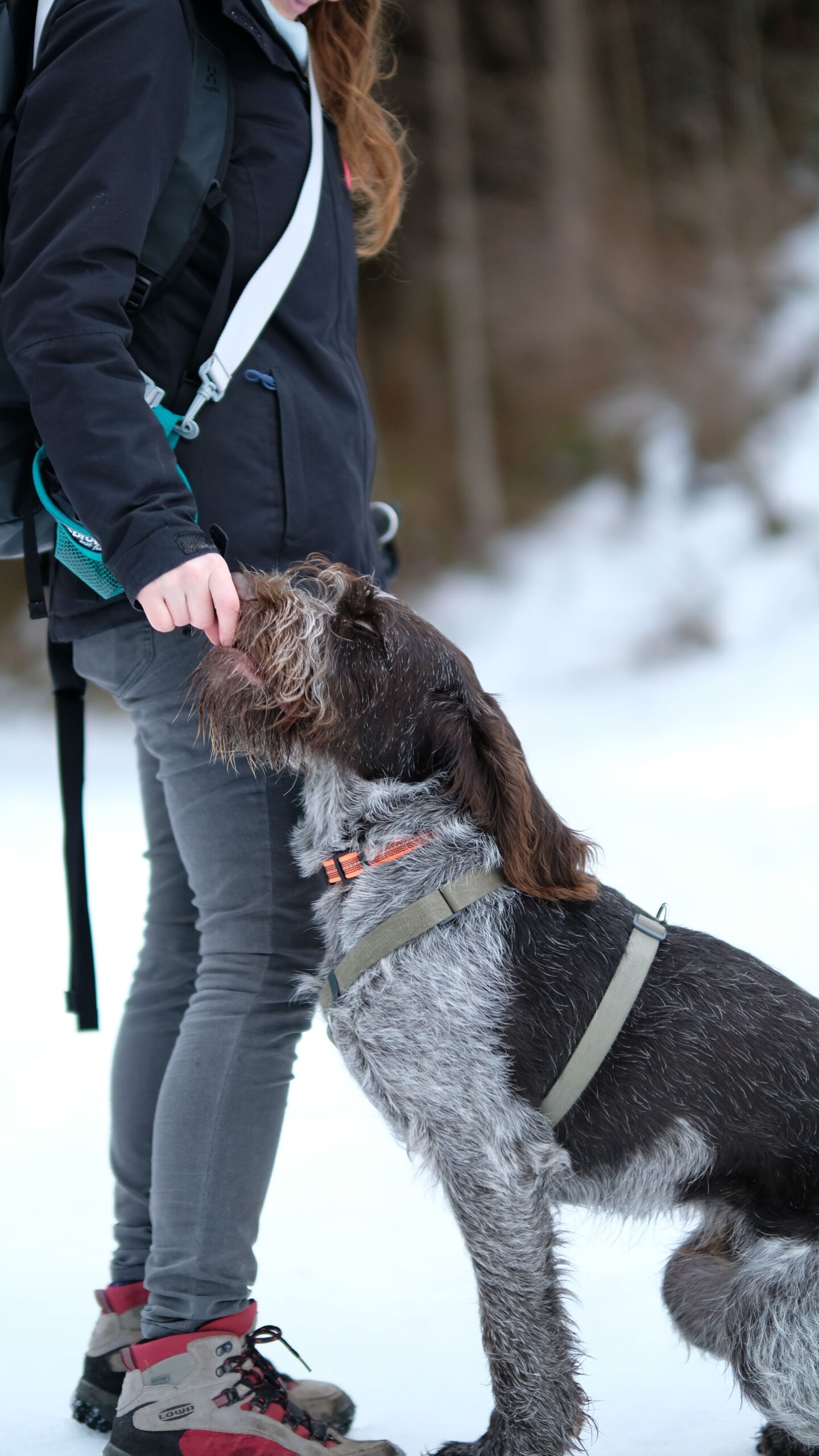
Clicker training is one of the most effective, science-based methods for teaching animals new behaviors. But the most common question from new trainers is simple: How long does it take? The answer is nuanced, depending on the species, the behavior complexity, the trainer’s skill, and the consistency of practice. This article provides a realistic timeline, breaks down the stages, and offers expert tips to accelerate progress without sacrificing quality.
The Core Principle: What Clicker Training Actually Is
Clicker training is a form of operant conditioning using a secondary reinforcer (the clicker sound) paired with a primary reinforcer (usually food or play). The click marks the exact moment a desired behavior occurs, bridging the gap between action and reward. This precision accelerates learning because the animal understands what earned the reward instantly.
General Timeline: From First Click to Skilled Behavior
While every animal learns at its own pace, a typical progression looks like this:
-
Day 1–3: Charging the Clicker (Classical Conditioning Phase)
The animal learns that “click = treat.” This usually takes 10–20 repetitions, spread over 1–3 short sessions (2–5 minutes each). No behavior is required. You simply click and treat. -
Day 4–14: Basic Behaviors (Simple Operant Conditioning)
Behaviors like “touch a target,” “sit,” “down,” or “look at me” begin emerging. Success in 2–5 sessions per behavior is common for dogs, cats, and parrots. Horses and small mammals (rabbits, guinea pigs) may take 5–10 sessions. -
Week 3–8: Shaping Complex Behaviors
Behaviors that require multiple steps, such as “fetch,” “roll over,” or “close a door,” take 2–4 weeks of daily practice. Shaping—where you reward successive approximations—is the key. -
Month 2–6: Proofing and Generalization
The behavior becomes reliable across different environments, with distractions, and without the clicker (fading). This phase can take 4–12 weeks, depending on the animal’s motivation and the trainer’s consistency. -
Beyond 6 Months: Advanced Skills and Problem-Solving
Complex sequences, scent work, or tricks requiring impulse control (e.g., “wait while I leave the room”) take months of incremental reinforcement. Many professional trainers see fluency at 6–12 months.
Species-Specific Timelines
Dogs: Most learn “sit” in 3–5 sessions (15–25 clicks). A reliable “stay” (10 seconds with distance) may take 3–6 weeks. Goldendoodles, Border Collies, and Labradors often learn faster due to high food motivation; more independent breeds like Huskies or Shiba Inus may need 2–3 times longer.
Cats: Clicker training cats is absolutely possible but typically slower. A simple “high five” may take 1–2 weeks. Cats have shorter training tolerance (3–5 minutes per session). Success depends on using high-value reinforcers like freeze-dried chicken or fish flakes.
Horses: Large animals require careful safety considerations. A horse learning to “touch a target with its nose” often takes 3–7 days of 5-minute sessions. More complex behaviors, like “load into a trailer voluntarily,” can take 4–8 weeks.
Birds (Parrots): Highly intelligent, but easily distracted. “Step up” may take 1–2 weeks. Trick training (e.g., “ring a bell”) can be achieved in 2–4 weeks. Sesame seeds, sunflower hearts, and safflower seeds are top reinforcers.
Small Mammals (Rabbits, Guinea Pigs, Rats): Rats learn fastest—a simple “spin” in 5–10 sessions. Rabbits require more patience, often 2–4 weeks for a touch behavior. Guinea pigs may take 3–6 weeks due to shorter attention spans and lower food drive.
Key Factors That Influence Speed
-
Frequency and Session Length – Two 5-minute sessions per day is far more effective than one 20-minute session. Short, frequent sessions prevent boredom and mental fatigue.
-
Reinforcer Quality – Use high-value rewards: tiny, soft, smelly treats your animal doesn’t get otherwise. A boring kibble in a full dog will slow progress immensely.
-
Handler Timing – The click must occur within 0.5 seconds of the desired behavior. A delayed click marks the wrong action, confusing the animal. This skill takes practice—expect initial mistakes.
-
Environmental Distractions – Train first in a quiet room with no other animals or people. Adding distractions (e.g., a toy on the floor, a loud noise) sets back progress by 2–5 sessions if introduced too early.
-
Animal’s Baseline Emotional State – Anxious, stressed, or overtired animals learn 50–75% slower. Prioritize calmness and hunger (not starvation) before each session.
Stage-by-Stage Timeline: Detailed Breakdown
Stage 1: Charging (Day 1–3)
- Goal: Condition that click predicts treat.
- Duration: 2 minutes, 2–3 times daily.
- Signs of success: Animal perks up, looks at you, or approaches when they hear the click.
- Common mistake: Clicking without treating. Always follow with a treat within 2 seconds.
Stage 2: Capturing (Day 4–7)
- Goal: Catch a spontaneous behavior (e.g., sit) and click/treat it.
- Duration: Session until 5–10 reinforcements are given.
- Speed: 2–3 sessions until the animal offers the behavior repeatedly.
- Tip: Do not lure with food—let the animal figure it out. Luring creates dependency and slows the learning of the clicker’s meaning.
Stage 3: Shaping (Week 2–5)
- Goal: Build a complex behavior step by step.
- Timeline: Basic 2-step behaviors (e.g., lie down from sit) often take 5–10 sessions. A 5-step behavior (e.g., fetch: touch, grasp, carry, drop, release) can require 20–40 sessions.
- Key metric: If the animal stops offering behavior after 10 clicks, end the session. This is a sign of mental fatigue, not failure.
Stage 4: Adding a Verbal Cue (Week 2–4)
- Goal: Attach a word (e.g., “sit”) to the behavior.
- Speed: 3–7 days after the behavior is reliable. You say the cue, wait 1 second, click the correct response.
- Common pitfall: Repeating the cue (e.g., “sit, sit, sit”). This teaches the animal to wait for multiple repetitions. Say it once.
Stage 5: Proofing (Month 1–3)
- Goal: Behavior occurs reliably in new locations.
- Timeline: 5–15 sessions per location. A fully proofed behavior (inside, outside, park, vet) takes 2–3 months of systematic practice.
- Rule of thumb: For every new distraction level, expect 30–50% regression. For example, a dog that sits 90% of the time in the kitchen may only sit 30% of the time at the dog park. This is normal.
Stage 6: Fading the Clicker (Month 3–6)
- Goal: The behavior occurs without the clicker (but still with intermittent treats).
- Timeline: 4–8 weeks. You gradually increase the number of correct behaviors before clicking (variable reinforcement).
- Sign of readiness: The animal performs the behavior immediately upon the cue, with no hesitation, in multiple environments.
Accelerating Progress: Expert Tips
1. Pre-session hunger matters. Train 60–90 minutes after a meal, or skip one meal and use training as the feeding. A motivated animal learns 3x faster.
2. Use the “10 click rule.” If after 10 clicks the animal hasn’t improved its behavior criteria (e.g., staying in a sit for 1 second longer), lower your criteria. You are asking too much too soon. This prevents frustration and keeps momentum.
3. End on a high note. Always stop after a successful click, never after a mistake. This leaves the animal eager for the next session.
4. Video yourself. Reviewing 2 minutes of footage will reveal timing errors you don’t notice in real time. Adjust your click point 0.1 seconds earlier or later.
5. Train for “offer” not “wait.” In early shaping, encourage the animal to actively try behaviors, not passively wait for a lure. Reward any movement toward the goal, even if incomplete.
6. Keep sessions positive. If the animal leaves, yawns excessively, or ignores treats, stop for the day. Forcing sessions creates negative associations that can take weeks to undo.
7. Habit stacking. Attach training to an existing routine—e.g., right after morning feeding. Consistency of timing builds associative learning.
Common Timeline Pitfalls to Avoid
- Skipping the charge phase: If you start clicking for behaviors immediately, the animal may not understand the clicker as a marker. This adds 1–2 weeks of confusion.
- Using low-value treats: A healthy treat that the animal “likes” but doesn’t love will lead to 50% slower progress. Use single-ingredient, smelly, soft treats.
- Progressing too fast: Moving to a distraction-heavy environment before the behavior is 85% reliable at home can set you back a full month. Be patient.
- Inconsistent session structure: Training for 15 minutes one day and 2 minutes the next disrupts the rhythm. Aim for the same duration daily.
Data-Driven Insights from Research
- A 2022 study in Applied Animal Behaviour Science found that dogs trained with a clicker reached behavioral fluency 15% faster than those trained with a verbal marker alone, over 8 weeks.
- The same study noted that sessions of 3–5 minutes produced 70% fewer errors than 10-minute sessions.
- For horses, a 2020 study showed that clicker-trained animals needed 20% fewer repetitions to learn a “target and follow” behavior compared to traditional pressure-release methods.
- Cat training research suggests a success rate of 80+% for simple behaviors within 10 sessions, but only 40% for an intermediate behavior like “spin,” likely due to shorter session tolerance.
When to Expect “Stall” Phases
Training is rarely linear. Expect plateaus:
- Week 2–3: The animal offers behaviors but becomes bored if the reinforcement isn’t varied. Change treat types or add small play breaks.
- Week 4–5: Shaping a new step often causes temporary loss of previous steps. This is called “extinction burst”—the animal tries harder, then stops. Hold your criteria steady.
- Month 2: Proofing can feel like starting over. The animal knows the behavior but ignores cues. This is normal; reduce criteria and rebuild.
Realistic Examples for Common Pets
- A Labrador learning “stay” for 10 seconds at home with no distractions: 1 week (5 sessions).
- A Labrador learning “stay” for 30 seconds at a busy park with squirrels: 5–8 weeks.
- A cat learning “sit” (rare but possible): 6–12 sessions over 2–3 weeks.
- A parrot learning “touch a target stick with beak”: 3–5 sessions.
- A rabbit learning “come when called”: 10–20 sessions (requires exceptional patience).
Long-Term Maintenance
Once behaviors are fluent, maintenance training takes 1–2 sessions per week (5 minutes each) to prevent extinction. If you stop completely for 2–4 weeks, you may see 50% regression. A single 5-minute refresher session usually restores fluency within 1–2 days.
Final Technical Note on the Clicker Itself
Use a standard box clicker (not a retractable one or a mobile app). The consistent, sharp sound is more distinct than a verbal “yes” and reduces timing variability. Replace it every 6 months or if the sound dulls. No single tool improves training speed more than a reliable, loud click.